
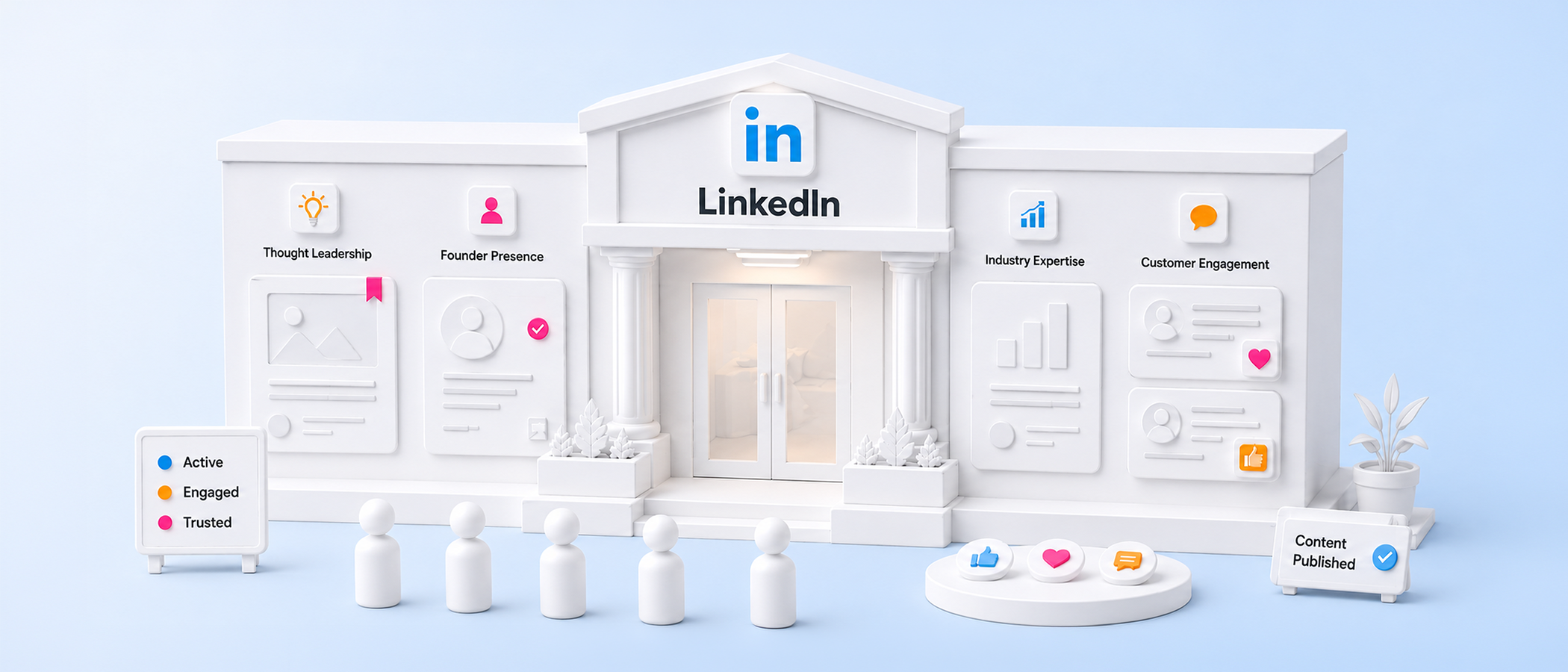
Most B2B companies are on LinkedIn. Most are getting very little from it. They post occasionally, get a few likes from colleagues and wonder why it isn't generating any real business impact.
The brands that are getting results — generating leads, building authority and staying front of mind with their buyers — are doing something fundamentally different. It's not about posting more. It's about understanding what LinkedIn actually rewards in 2026.
Why LinkedIn Matters More Than Ever for B2B
LinkedIn is where B2B decisions get influenced. Not made — influenced. Your buyers are researching vendors, following thought leaders, evaluating companies and forming opinions about who is credible in your space — long before they ever reach out.
A B2B company with no LinkedIn presence isn't just missing a marketing channel. It's missing the room where its buyers are spending time. Absence from LinkedIn is a trust signal in itself — and not a positive one.
What Doesn't Work Anymore
Before getting to what works, it's worth being clear about what doesn't — because most B2B companies are still doing it.
Content Formats That Perform in 2026
LinkedIn's algorithm in 2026 rewards content that generates meaningful engagement — comments, shares and saves — over content that just gets likes. Here are the formats that consistently perform for B2B brands:
How Often Should You Post?
Consistency beats frequency. One well-crafted post three times a week outperforms seven mediocre posts. But here's what the data shows about what works for B2B company pages:
Both matter — but they serve different purposes, and most B2B companies get the balance wrong.
Company pages are your brand's official presence. They should be professionally designed, consistently posted and used to build brand authority, share company news and distribute content. They tend to have lower organic reach than personal profiles but are essential for credibility.
Personal profiles — particularly the founder or CEO — consistently outperform company pages in organic reach. LinkedIn is a personal network at its core. People follow people. A post from Robby Rawat about something he's learned will reach more people than the same post from iGenius Global Services.
The practical implication: if you're resource-constrained, invest in personal profile content first. If you have capacity for both, run them in parallel with complementary content — the company page for brand-level content, personal profiles for insights, opinions and stories.
LinkedIn Company Page Optimisation Checklist
Before worrying about content, make sure your company page is properly set up. A badly optimised page undermines everything else.
Building a B2B LinkedIn Content Strategy
Consistency at scale requires a system — not inspiration. The brands that show up on LinkedIn week after week aren't more creative than the ones that don't. They have a process.
LinkedIn is the single highest-value social platform for most B2B companies — but only when used with consistency, a clear strategy and genuine value in every post. The brands winning on LinkedIn aren't the biggest or most well-known. They're the ones showing up, sharing what they know and treating their audience like the intelligent professionals they are.
Frequently Asked Questions

Stay in the loop
Get B2B branding insights in your inbox
One practical article every two weeks. No fluff, no spam.