

Most B2B companies choose a marketing agency the same way they choose a vendor for anything else. They ask for a proposal, compare a few numbers, and pick the one that sounds most confident on the call. The problem is that B2B marketing agency engagements rarely fail because the agency lacked ability. They fail because the scope, pricing and commitment were built for the agency's convenience, not the client's actual month to month reality.
A twelve month marketing retainer sounds serious and safe. In practice, it often locks a company into a fixed scope decided in month one, long before anyone knows what will actually matter in month six. For industrial, pharma, construction and export companies, whose priorities shift with tenders, product launches and buying cycles, a rigid retainer rarely matches how the business actually moves. The questions below are the ones that reveal this before you sign anything, not after.
Why B2B Buyers Are Vetting Agencies Differently Now
Industrial and pharma buyers already do most of their own vetting before they ever speak to a vendor. The same behaviour applies when a company is choosing who handles its own marketing. Buyers increasingly compare providers, review actual output and evaluate credibility long before signing anything, using far more channels and touchpoints than a single pitch call.
The Real Problem With Most Agency Pitches
Almost every B2B marketing agency pitch sounds similar. Full service, dedicated account team, proven results. What rarely gets said out loud is how rigid the actual delivery structure is once the contract is signed. A scope written in a proposal in January often has nothing to do with what the business actually needs by April, a new product launch, a shift in target market, a sudden need for a case study instead of another social post.
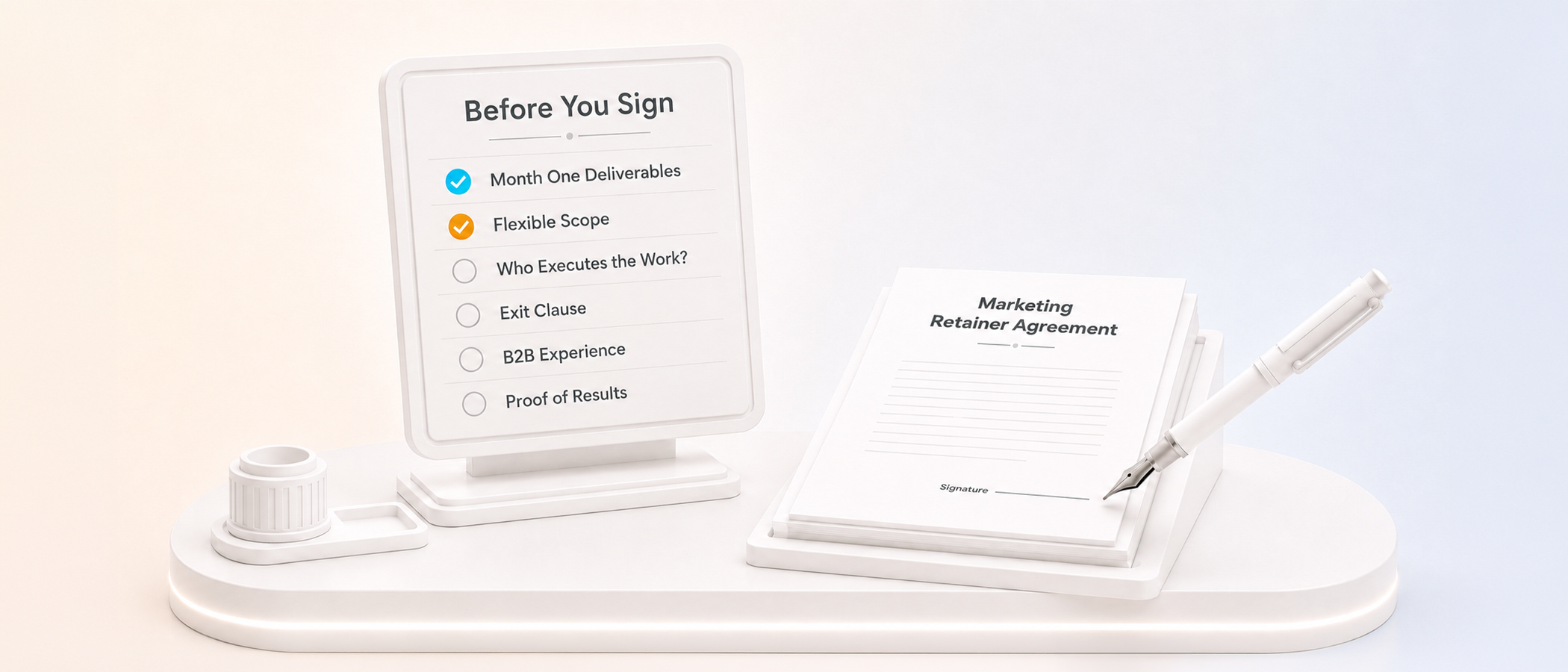
Six Questions to Ask Before You Sign Anything
These are not trick questions. They are simply the ones most proposals are not built to answer clearly
What a Subscription Model Actually Changes
A subscription is not just a different price structure. It changes the underlying incentive. An agency on a fixed annual retainer is paid the same whether the work this month is exactly what you need or a leftover from a plan written months ago. An agency on a monthly subscription has to keep earning the renewal, which means scope adjusts to what the business actually needs right now, a rebrand push one month, a technical content sprint the next, without a change order in between.
This does not mean every subscription model is automatically better, some are just retainers with a different name on the invoice. The six questions above still apply. What matters is whether the structure itself rewards flexibility, or just calls itself flexible.
If you want a second opinion on a marketing proposal you are already reviewing, or want to see how a subscription based B2B marketing engagement would actually look for your business, a free Brand Audit from iGenius covers current brand presence, digital credibility and search visibility as core assessment areas. Get Your Free Brand Audit
Frequently Asked Questions

Stay in the loop
Get B2B branding insights in your inbox
One practical article every two weeks. No fluff, no spam.