
Search is no longer a single channel. Your buyers are now finding vendors across Google, ChatGPT, Perplexity, Google AI Overviews and a growing list of AI-powered platforms — and most B2B companies have absolutely no strategy for anything beyond traditional Google SEO.
That's the gap. And right now, it's an opportunity — because the businesses that understand GEO and AEO early will own visibility in these channels before their competitors even know what they are.
First, what is traditional SEO?
SEO (Search Engine Optimisation) is the practice of optimising your website and content to rank higher on search engines like Google. When someone searches "B2B branding agency India", SEO is what determines whether your website appears on page one or page ten.
Traditional SEO focuses on keywords, backlinks, site speed, technical structure and content quality. It's been the dominant digital marketing strategy for the past two decades — and it still matters. But it's no longer enough on its own.
What is GEO — Generative Engine Optimisation?
GEO (Generative Engine Optimisation) is the practice of optimising your brand's online presence to appear in AI-generated answers on platforms like ChatGPT, Perplexity and Google AI Overviews.
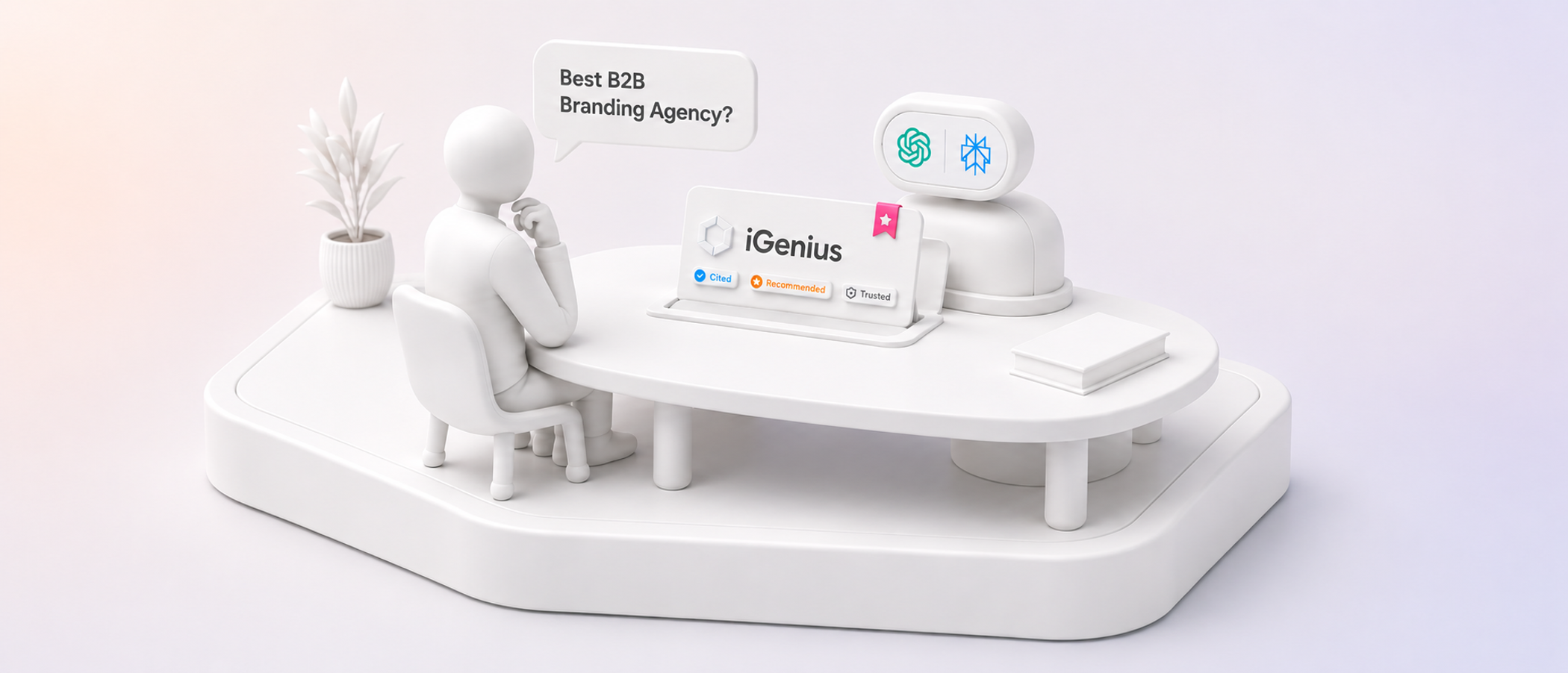
When a buyer asks ChatGPT "what's the best B2B branding agency in India?" — GEO determines whether your brand is cited in the answer.
Unlike traditional SEO which focuses on ranking in a list of links, GEO focuses on becoming a source that AI models reference and cite when generating answers. This requires a fundamentally different approach to content, authority building and digital presence.
Key difference: SEO gets you a link in a list. GEO gets you mentioned in the answer itself — often without the buyer needing to click anything.
What is AEO — Answer Engine Optimisation?
AEO (Answer Engine Optimisation) is the practice of structuring your content to directly answer the specific questions your buyers are asking — so that your brand becomes the source of the answer, not just a result.
AEO targets platforms and features that provide direct answers: Google's featured snippets ("Position Zero"), People Also Ask boxes, voice search results and increasingly, AI chatbots. The goal is simple: when someone asks a question relevant to your business, your answer appears.
- AEO focuses on questions - not just keywords. It's about understanding what your buyers are literally asking and providing the clearest, most direct answer.
- Structure matters enormously - clear headings, concise definitions, FAQ formats and schema markup all signal to AI engines that your content is answer-worthy.
- Authority is the foundation - AI engines cite sources they trust. Building domain authority through quality content, backlinks and brand mentions remains critical.
SEO vs GEO vs AEO — what's the difference?
Think of them as three layers of the same search visibility strategy:
- SEO — gets you found on Google when someone searches a keyword. You appear as a link in a ranked list.
- AEO — gets you featured as a direct answer on Google (snippets, PAA boxes) and voice search. You become the answer, not just a result.
- GEO — gets your brand cited in AI-generated answers on ChatGPT, Perplexity and Google AI. You become a trusted source that AI references.
They're not mutually exclusive — in fact, a strong SEO foundation makes GEO and AEO significantly more achievable. But each requires specific, deliberate strategy.
Why does this matter for B2B companies right now?
60% of searches now end without a click — AI answers the question before the user ever visits a website. 3× more B2B buyers are using AI tools to find and shortlist vendors than they were two years ago. And 90% of B2B businesses currently have no GEO or AEO strategy.
The businesses that build GEO and AEO presence now will own AI search visibility by the time their competitors realise it matters.
This is the early-mover moment. The brands investing in this now — building structured content, establishing authority, optimising for AI citation — will have a significant, compounding advantage over the next 2-3 years.
How to start building GEO and AEO presence
This isn't a one-month project — it's a sustained content and authority-building strategy. But here's where to begin:
- Answer your buyers' questions directly — create content that starts with a clear, direct answer to a specific question, then expands. This is the format AI engines extract from.
- Build topical authority — don't write one post on GEO. Build a comprehensive body of content around your expertise area. AI engines favour depth.
- Use structured data (schema markup) — FAQ schema, Organisation schema and Article schema all help AI engines understand and cite your content.
- Get cited externally — AI models reference sources that are cited elsewhere online. PR, thought leadership, guest articles and industry mentions all contribute.
- Optimise your brand presence on AI platforms — ensure your business is accurately represented on platforms that AI models train on and reference.
GEO and AEO aren't replacements for SEO — they're the next layer of a complete search visibility strategy. B2B companies that start building this foundation now will find themselves with a significant advantage as AI search continues to grow.
At iGenius, SEO, GEO and AEO are part of our Pro plan — executed as a unified strategy, not three separate services. Learn more about how we approach next-gen search visibility.

Stay in the loop
Get B2B branding insights in your inbox
One practical article every two weeks. No fluff, no spam.