
Type a prompt into an AI design tool and you'll have a logo in under a minute. Color palette, typography suggestions, a handful of variations — all generated before you've finished your coffee. For a B2B company evaluating creative options, this raises an obvious question: do we still need a creative team, or can AI just handle this now?
The honest answer is more nuanced than either side of that debate usually admits. AI has genuinely changed brand creation — and not just by making things faster. But it's also introduced a set of very specific, very real problems that most companies only discover after they've already burned through hours and credits trying to fix them.
How AI Has Genuinely Changed Brand Creation
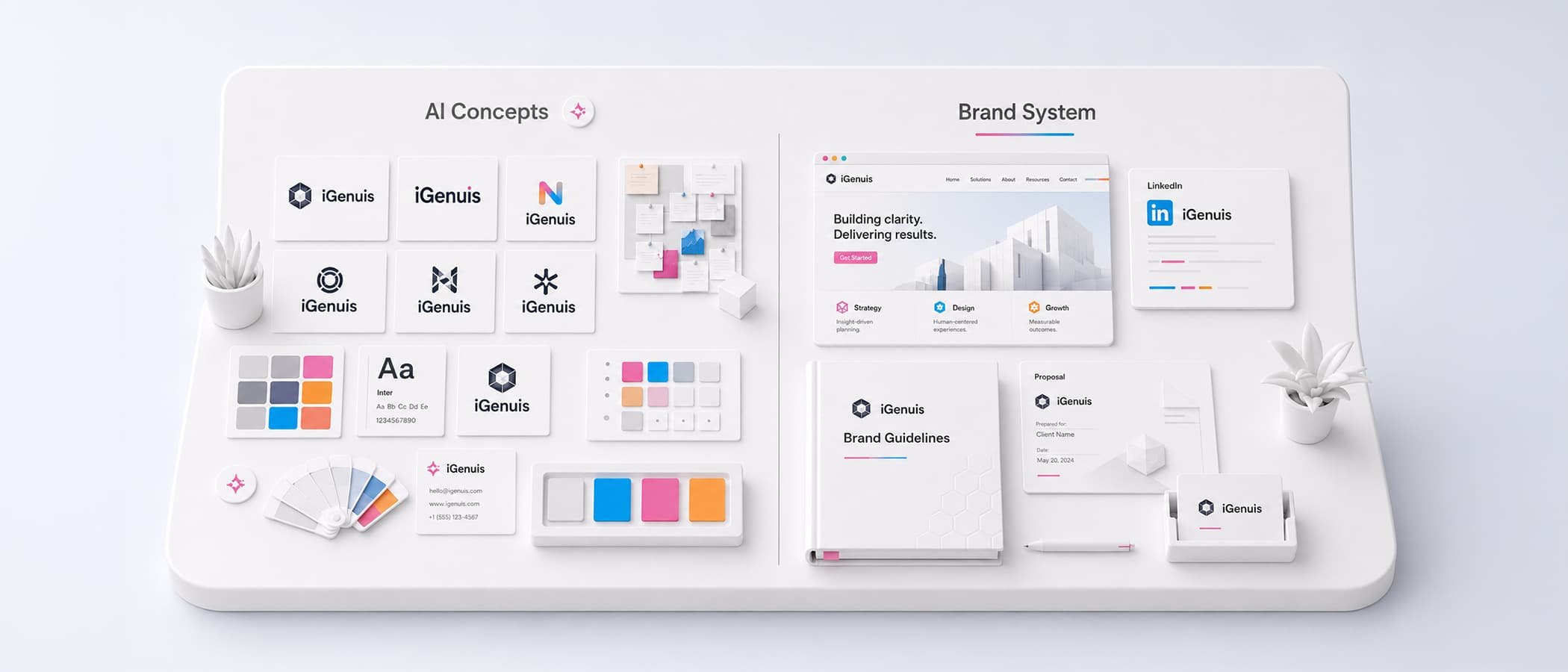
It's worth being honest about this first: AI tools have made one part of the branding process meaningfully better. Concept exploration is faster and clearer than it used to be.
A client used to arrive at a first creative call with a vague sense of what they wanted — "modern," "professional," "something that stands out." Now they often arrive having already generated a dozen AI mood images, tested a few color directions, maybe even drafted a rough logo concept themselves. The brief starts at a much better point. That's a genuine improvement, and it makes the working relationship between client and creative team faster from day one.
Where AI Tools Break Down in Practice
The gap between "AI can generate a logo" and "AI can build a brand" becomes obvious the moment you try to actually use the output for real, ongoing work. Two problems show up almost immediately — and they're not edge cases. They're structural.
For a B2B company, this is not a cosmetic detail. Consistency is one of the primary ways a buyer's brain registers "this is a real, established, trustworthy company" versus "this looks improvised." A logo that subtly shifts between your website, your deck and your LinkedIn banner sends a quiet but real signal — even if the buyer can't articulate exactly why something feels off.
Where AI Genuinely Helps vs Where It Falls Short
The New "Looks Unfinished" Signal
There's a second-order effect worth naming directly: as AI-generated brand assets become common, they're starting to develop recognisable tells — certain gradients, certain typographic quirks, a particular "AI-made" look that experienced eyes increasingly clock on sight.
This used to be true of cheap template websites a decade ago — a certain stock-photo, generic-font look instantly signalled "this company didn't invest in itself." AI-generated brand identity is becoming the new version of that signal for B2B buyers who are evaluating dozens of vendors and forming snap judgments about credibility.
Where a Creative Team Actually Fits Now
The honest conclusion isn't "avoid AI tools." It's that AI is genuinely excellent at one part of the process — exploration — and genuinely weak at the part that actually matters for a real brand: consistent, strategic execution across everything a B2B company needs.
This is exactly the gap a creative subscription is built to fill — not by avoiding AI, but by using it as one tool inside a process that's still led by people who understand brand strategy, consistency and what a B2B buyer actually responds to. See how iGenius combines AI-assisted speed with human-led brand consistency across every asset a growing B2B company needs.
Frequently Asked Questions

Stay in the loop
Get B2B branding insights in your inbox
One practical article every two weeks. No fluff, no spam.